MOTS-c: The "Exercise in a Bottle" Peptide That Fights Aging
Discover MOTS-c, the mitochondrial peptide called "exercise in a bottle." Research suggests it may improve metabolism, insulin sensitivity, and fight aging.
TL;DR
MOTS-c is a novel peptide derived from mitochondrial DNA that is gaining significant attention as an "exercise mimetic." Research indicates it plays a crucial role in regulating metabolism, enhancing insulin sensitivity, and supporting cellular health, showing potential as a key component in longevity and anti-aging strategies.
What is MOTS-c, and Why Is It Called "Exercise in a Bottle"?
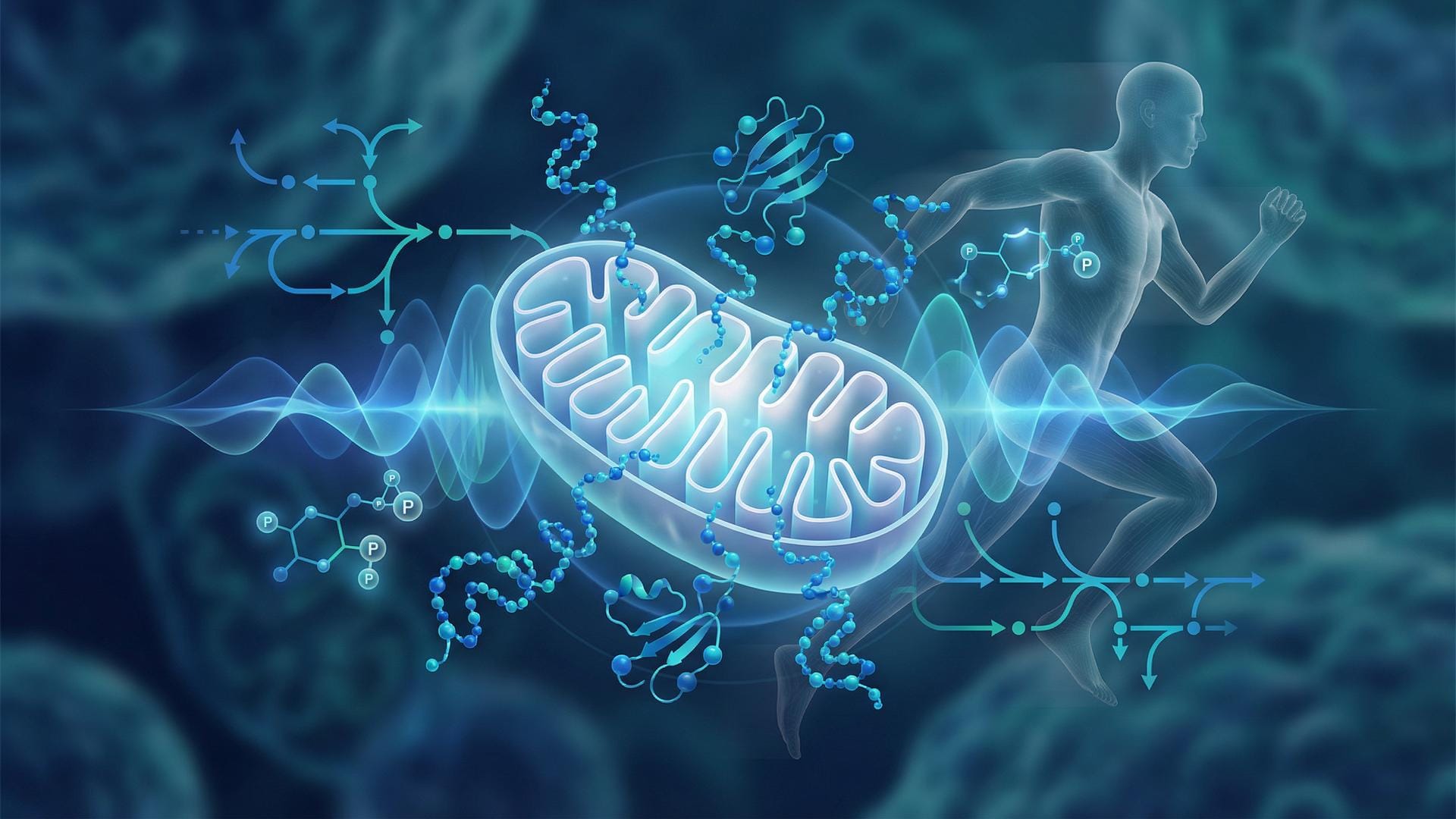
In the rapidly evolving landscape of peptide research, a new compound is generating significant buzz in 2026: MOTS-c. Dubbed "exercise in a bottle" by biohackers and longevity enthusiasts, this unique peptide is being studied for its remarkable ability to mimic the metabolic effects of physical exertion at a cellular level.
Unlike the vast majority of peptides, which are encoded by nuclear DNA, MOTS-c is one of a select few known as mitochondrial-derived peptides (MDPs). This means its blueprint comes directly from the DNA within your mitochondria—the tiny powerhouses inside your cells responsible for generating energy. First identified by researchers at the University of Southern California in 2015, MOTS-c acts as a signaling molecule, communicating with the rest of the cell to regulate energy and metabolism, particularly under stress [1].
The Science: How MOTS-c Works at a Cellular Level
To understand the function of MOTS-c, it's essential to appreciate its origin. As a mitochondrial-derived peptide, it provides a direct link between mitochondrial health and overall systemic function. Its primary mechanism of action is the activation of a master metabolic regulator in the body known as AMP-activated protein kinase (AMPK) [2].
Activating AMPK is like flipping a switch that tells your cells to start burning fuel more efficiently. This process increases the uptake and use of glucose and fats for energy, a state very similar to what occurs naturally when you engage in strenuous exercise. This is precisely why MOTS-c has earned its reputation as an "exercise mimetic."
Crucially, research has shown that our natural production of MOTS-c declines as we age. One study noted that circulating levels of MOTS-c can be up to 21% lower in older adults compared to their younger counterparts, suggesting a potential link between its decline and age-related metabolic slowdown [4]. Supplementing this peptide is therefore an area of intense research interest for those looking to slow down the aging process.
Top 4 Researched Benefits of MOTS-c
While much of the data is from preclinical studies, the findings are compelling and point toward several key areas of benefit.
1. Enhancing Metabolism and Insulin Sensitivity
One of the most well-documented effects of MOTS-c is its impact on metabolic health. By activating AMPK, it helps cells absorb glucose from the bloodstream more effectively, which can improve insulin sensitivity. In a landmark study, researchers found that just seven days of MOTS-c administration in old mice restored their insulin sensitivity to levels seen in young, healthy mice [1]. This suggests a powerful potential for supporting metabolic balance and healthy weight management.
2. Supporting Longevity and Healthy Aging
The health of our mitochondria is intrinsically linked to the aging process. As these cellular powerhouses become less efficient, age-related decline accelerates. Research published in Nature Communications highlighted that late-life treatment with MOTS-c extended the healthy lifespan of mice, positioning it as a significant compound in longevity research [2]. It appears to work by bolstering the cell's resilience to stress and promoting overall cellular homeostasis.
3. Improving Physical Performance and Endurance
As an "exercise-induced" peptide, MOTS-c levels naturally rise during physical activity. Studies have shown that supplementing with it can enhance physical performance and endurance. It helps regulate metabolic pathways during exercise, potentially allowing for more efficient energy use and a longer time to fatigue, making it a subject of interest for athletic performance.
4. Reducing Inflammation
Chronic, low-grade inflammation is a key driver of many age-related diseases. Research has indicated that MOTS-c possesses anti-inflammatory properties. Studies have observed that it can decrease the levels of pro-inflammatory cytokines while simultaneously increasing anti-inflammatory cytokines, suggesting it helps restore a more balanced and healthy inflammatory response [3].
MOTS-c vs. Other Peptides: A Comparison
With so many peptides available for research, it can be challenging to understand where MOTS-c fits. Here’s a table comparing it to other popular compounds.
| Feature | MOTS-c | BPC-157 | CJC-1295 / Ipamorelin |
|---|---|---|---|
| Primary Function | Metabolic Regulation & Longevity | Tissue Repair & Gut Health | Growth Hormone Release |
| Mechanism | Activates AMPK Pathway | Angiogenesis & Growth Factor Modulation | Stimulates Pituitary Gland |
| Best For | Improving insulin sensitivity, energy metabolism, and cellular aging. | Injury recovery, reducing inflammation, and supporting gut lining. | Anti-aging, muscle growth, and fat loss via GH optimization. |
| Origin | Mitochondrial DNA | Synthetic (derived from a stomach protein) | Synthetic Analogs of GHRH & Ghrelin |
How Is MOTS-c Used in Research? (Dosage & Cycles)
This information is for educational purposes only and is not a recommendation for use. MOTS-c is an experimental compound intended for research purposes only.
In research settings, MOTS-c is typically administered via subcutaneous injection to ensure systemic delivery. While protocols vary, common dosages observed in studies range from 5mg to 15mg per week, often divided into two or three separate injections to maintain stable levels. A typical research cycle might last between two and four weeks, followed by an equivalent off-period. For more general information on research protocols, see our guide to peptide dosing and cycling.
Is MOTS-c Safe? Potential Side Effects and Considerations
As a relatively new peptide, human clinical data on MOTS-c is still limited. The majority of safety and efficacy data comes from animal studies. It is important to note that MOTS-c is on the World Anti-Doping Agency (WADA) Prohibited List, which bans its use in competitive sports [5]. Anecdotal reports from online forums mention minor side effects, such as temporary redness or irritation at the injection site. The quality and purity of the peptide are paramount for any research application.
Frequently Asked Questions
Is MOTS-c a steroid?
No, MOTS-c is not a steroid. It is a 16-amino acid peptide derived from mitochondrial DNA and does not have the chemical structure or hormonal function of an anabolic steroid.
Can you stack MOTS-c with other peptides?
In research settings, MOTS-c is sometimes studied in combination with other peptides to explore synergistic effects. For example, it might be paired with growth hormone secretagogues like CJC-1295 to target both metabolic health and GH release, or with peptides for muscle growth to support lean mass during fat loss phases.
How quickly do you see results from MOTS-c in research?
The timeline for observing effects in research studies can vary. Some metabolic markers, like insulin sensitivity, have shown improvement in as little as one week in animal models. Anecdotal reports suggest that effects on energy and endurance may be noticed within two to four weeks.
Is MOTS-c legal?
The legal status of peptides can be complex. MOTS-c can be legally purchased for research purposes. However, it is not approved by the FDA for human consumption as a drug. Recent discussions around FDA reclassification may change its accessibility through compounding pharmacies in the future.
The Future of Mitochondrial Peptides
MOTS-c and other mitochondrial-derived peptides represent a frontier in metabolic and longevity science. By directly influencing the energy centers of our cells, these compounds offer a novel mechanism for promoting health and resilience. As research continues to uncover the full extent of their benefits, MOTS-c stands out as one of the most promising peptides for anyone interested in optimizing their health from the inside out.
--- ### References
- Lee, C., et al. (2015). The Mitochondrial-Derived Peptide MOTS-c Promotes Metabolic Homeostasis and Reduces Obesity and Insulin Resistance. Cell Metabolism, 21(3), 443-454. https://www.sciencedirect.com/science/article/pii/S1550413115000613
- Reynolds, J.C., et al. (2021). MOTS-c is an exercise-induced mitochondrial-encoded regulator of age-dependent physical decline and muscle homeostasis. Nature Communications, 12(1), 470. https://www.nature.com/articles/s41467-020-20790-0
- Zheng, Y., et al. (2023). MOTS-c: A promising mitochondrial-derived peptide for therapeutic exploitation. Frontiers in Endocrinology, 14. https://www.frontiersin.org/journals/endocrinology/articles/10.3389/fendo.2023.1120533/full
- Mohtashami, Z., et al. (2022). MOTS-c, the Most Recent Mitochondrial Derived Peptide in Aging and Longevity. International Journal of Molecular Sciences, 23(19), 11991. https://pmc.ncbi.nlm.nih.gov/articles/PMC9570330/
- U.S. Anti-Doping Agency (USADA). What is the MOTS-c peptide? Retrieved from https://www.usada.org/spirit-of-sport/what-is-mots-c-peptide/
These statements have not been evaluated by the Food and Drug Administration. This product is not intended to diagnose, treat, cure, or prevent any disease. The information provided on this website is for informational purposes only and is not intended as a substitute for advice from your physician or other health care professional.