The Ultimate Guide to Nasal Peptides: A Non-Invasive Path to Brain & Body Optimization
Discover how nasal peptides offer a non-invasive, direct-to-brain delivery system. Our science-backed guide covers benefits, safety, and top peptides.
TL;DR
Nasal peptides offer a non-invasive, needle-free method to deliver therapeutic peptides directly to the brain by bypassing the blood-brain barrier. Research suggests that peptides like Selank, Semax, and VIP may support cognitive function, mood, and systemic health when administered intranasally. However, quality sourcing and professional guidance are essential for safe use.
Introduction: The Rise of Nasal Peptides
The peptide revolution has moved beyond the needle. From Silicon Valley biohackers to wellness enthusiasts, people are discovering that some of the most powerful peptides can be delivered through a simple nasal spray. Publications like Vogue have recently highlighted this trend, noting that "people aren't just injecting peptides, they're snorting them, too." This shift represents more than just convenience; it reflects a growing understanding of how nasal peptides can leverage the body's natural pathways to deliver therapeutic compounds directly to the brain.
Nasal peptides, also known as intranasal peptides, are short chains of amino acids administered through the nasal cavity. Unlike traditional oral medications that must survive the harsh environment of the digestive system, or injections that circulate through the bloodstream, nasal peptides take a direct route to the central nervous system. This method is gaining traction not only for its ease of use but also for its potential to enhance bioavailability and reduce systemic side effects.
This comprehensive guide explores the science behind how peptides work, examines which peptides are best suited for nasal administration, and provides evidence-based insights into the benefits, risks, and proper use of this emerging delivery method.
What Are Nasal Peptides and How Do They Work?
Understanding nasal peptides requires first grasping why this delivery method exists at all. Peptides are naturally occurring or synthetic chains of amino acids that act as signaling molecules in the body. They regulate everything from hormone production to immune function, making them powerful therapeutic tools. However, delivering peptides to their target sites, especially the brain, has historically presented significant challenges.
Bypassing the Blood-Brain Barrier: The Nose-to-Brain Pathway
The blood-brain barrier (BBB) is one of the body's most formidable defenses. This highly selective membrane protects the brain from potentially harmful substances in the bloodstream, but it also blocks approximately 98% of small-molecule drugs and nearly all large-molecule therapeutics, including peptides. The BBB comprises tightly packed endothelial cells with transendothelial resistance measuring 1500-2000 Ω·cm², compared to just 3-33 Ω·cm² in other tissues. Additionally, efflux pumps actively remove substances that do manage to cross, while proteolytic enzymes degrade peptides before they can reach brain tissue.
Traditional methods of delivering peptides to the brain require invasive techniques such as intracerebroventricular infusion or temporary disruption of the BBB using osmotic agents. These approaches carry risks of infection, inflammation, and brain tissue damage. Oral administration is equally problematic, as peptides are rapidly destroyed by stomach acid and digestive enzymes, resulting in bioavailability often in the single digits.
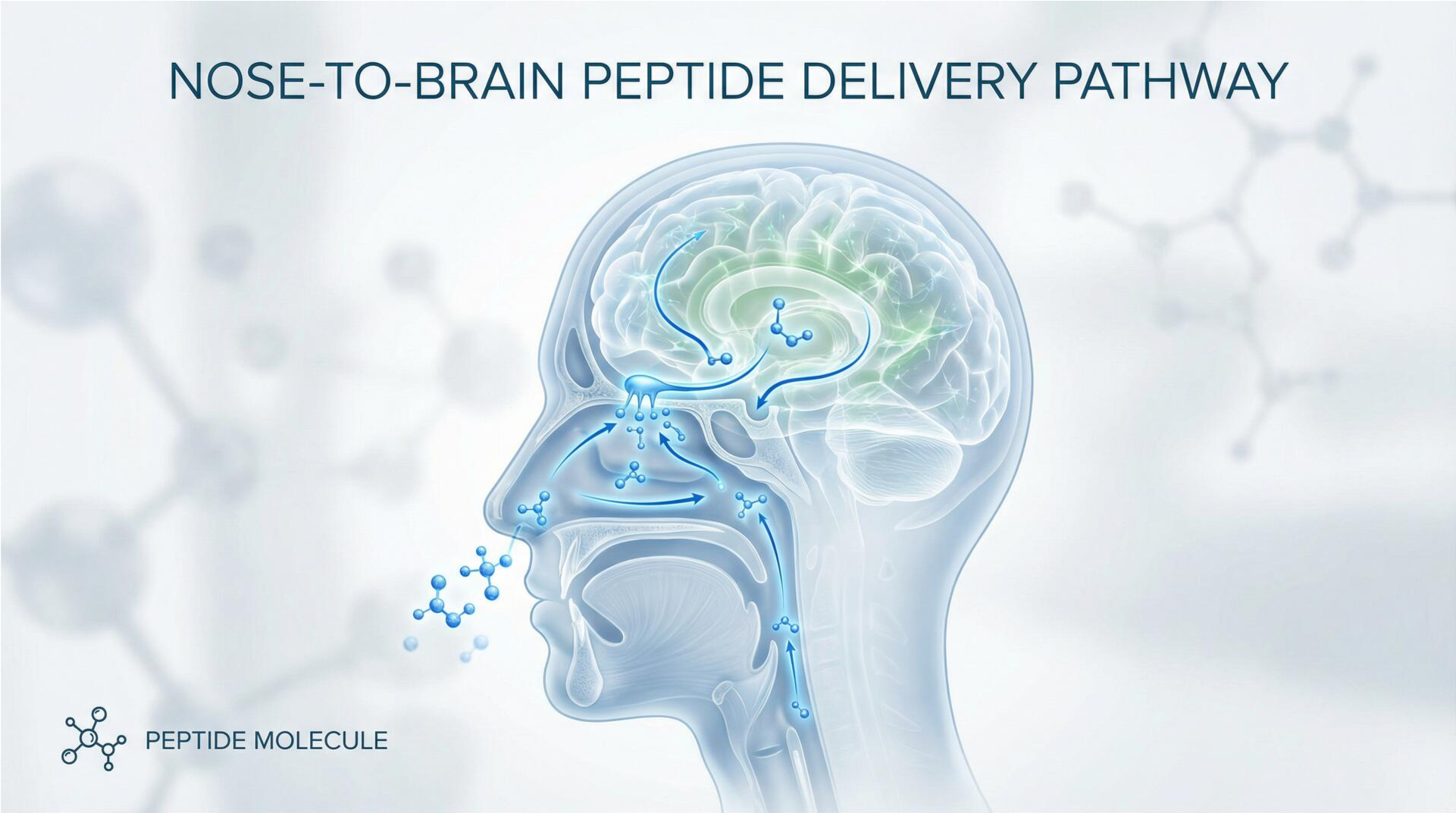
The nose-to-brain pathway offers an elegant solution. Research published in Pharmaceutics demonstrates that the nasal cavity provides a unique connection between the external environment and the central nervous system through the olfactory and trigeminal nerves. When peptides are administered intranasally, they can be transported directly to the brain via two primary routes: the olfactory nerve pathway, which connects the nasal epithelium to the olfactory bulb, and the trigeminal nerve pathway, which innervates the nasal mucosa and projects to various brain regions.
Think of it as a VIP entrance to the brain. While injected peptides must navigate the crowded bloodstream, pass through multiple security checkpoints (the BBB), and often get turned away by efflux pumps, nasal peptides take a direct backstage route. This mechanism allows for rapid onset of action, typically within 10 to 80 minutes, and significantly higher brain concentrations compared to systemic administration.
Key Benefits of Intranasal Peptide Delivery
The growing interest in nasal peptides stems from several distinct advantages over traditional delivery methods. Understanding these benefits helps explain why researchers and clinicians are increasingly exploring intranasal administration for peptide therapeutics.
Rapid Onset and Direct Brain Targeting
One of the most compelling advantages of nasal peptide delivery is the speed at which therapeutic effects can manifest. Studies on intranasal peptide delivery show that concentrations in cerebrospinal fluid typically peak between 30 and 80 minutes after administration. This rapid onset is particularly valuable for peptides targeting cognitive function, mood, or acute neurological symptoms. For example, research on intranasal delivery of antidepressant peptides published in Nature demonstrated that the olfactory pathway enables protein and peptide drugs to reach the brain noninvasively, with measurable effects occurring significantly faster than oral or even some injectable formulations.
Non-Invasive and Convenient
The psychological and practical barriers associated with self-injection cannot be understated. Many individuals who could benefit from peptide therapy are deterred by needle phobia, the inconvenience of sterile technique, or concerns about injection site reactions. Nasal sprays eliminate these obstacles entirely. The administration process is as simple as using a common decongestant spray, making it accessible for daily or multiple-times-daily dosing without the need for medical training or specialized equipment.
Reduced Systemic Exposure
When peptides are delivered directly to the brain via the nasal route, systemic circulation is minimized. This targeted delivery can reduce the risk of off-target effects and systemic side effects. Research in Frontiers in Pharmacology on the systemic and brain delivery of peptides through the nasal route notes that intranasal administration avoids liver metabolism and renal filtration, two processes that not only reduce bioavailability but also create metabolites that may contribute to adverse effects. For peptides intended to act primarily on the central nervous system, this focused delivery represents a significant therapeutic advantage.
Which Peptides Are Suitable for Nasal Delivery?
Not all peptides are created equal when it comes to intranasal administration. The effectiveness of nasal delivery depends primarily on two factors: peptide size and stability. Peptides are fragile molecules that can be degraded by enzymes in the nasal mucosa, and larger peptides (typically those with more than 45 amino acids) are often too bulky to efficiently cross the nasal epithelium. The nasal environment also presents challenges such as mucociliary clearance, which moves substances out of the nasal cavity at approximately 5 millimeters per minute.
Despite these limitations, several peptides have demonstrated excellent suitability for intranasal delivery, while others remain better suited for traditional injection. Understanding which peptides belong in each category is essential for anyone considering nasal peptide therapy.
Top Peptides for Nasal Administration
Selank is one of the most well-researched nasal peptides, developed in Russia as a synthetic derivative of the naturally occurring peptide tuftsin. Research suggests that Selank may support mood regulation, reduce anxiety, and enhance cognitive function. Longevity physicians have noted its potential as an alternative to selective serotonin reuptake inhibitors (SSRIs) for individuals seeking mood support without the side effects associated with conventional antidepressants. Selank's short peptide chain makes it ideal for intranasal delivery, and studies indicate it can modulate neurotransmitter systems including serotonin, dopamine, and GABA when administered nasally.
Semax is another nootropic peptide that excels when delivered intranasally. Originally developed as a treatment for stroke and brain injury, Semax is associated with neuroprotection, enhanced memory consolidation, and improved focus. The peptide appears to increase brain-derived neurotrophic factor (BDNF) levels and support neuroplasticity. Its mechanism involves modulation of the expression of genes related to the immune and nervous systems, making it a powerful tool for cognitive optimization.
VIP (Vasoactive Intestinal Peptide) is a naturally occurring peptide with wide-ranging effects on inflammation, immune function, and gut health. Research suggests that intranasal VIP may support individuals with chronic inflammatory conditions, mold-related illness, or gut-brain axis dysfunction. VIP receptors are found throughout the brain and body, and nasal administration allows for both central and peripheral effects while minimizing systemic exposure.
DSIP (Delta Sleep-Inducing Peptide) is associated with promoting deep, restorative sleep by modulating the central nervous system. While the exact mechanisms remain under investigation, DSIP appears to influence sleep architecture and may support individuals with insomnia or disrupted sleep patterns. The peptide's small size and stability make it well-suited for nasal delivery.
Oxytocin, often called the "love hormone" or "social bonding peptide," is perhaps the most widely recognized nasal peptide. Intranasal oxytocin has been studied extensively for its potential effects on social cognition, trust, empathy, and mood. While research results have been mixed, some studies suggest benefits for individuals with autism spectrum disorders or social anxiety.
Peptides Better Suited for Injection
While the convenience of nasal delivery is appealing, some peptides simply work better when injected. BPC-157, a synthetic peptide derived from a protective protein found in gastric juice, is frequently discussed in the context of peptides for healing and repair like BPC-157 and TB-500. Although some individuals experiment with nasal BPC-157, the bulk of research supports subcutaneous or intramuscular injection for systemic healing effects. The peptide's mechanism of action involves promoting angiogenesis, modulating growth factor expression, and supporting tissue repair throughout the body—effects that require adequate systemic distribution.
TB-500 (Thymosin Beta-4) is similarly better suited for injection. This peptide is associated with tissue repair, wound healing, and reduction of inflammation. Its larger size and the need for systemic distribution make injection the preferred route of administration.
GHK-Cu (Copper Peptide) has gained attention in skin care and anti-aging circles for its potential to support collagen production and tissue remodeling. While some nasal formulations exist, research suggests that injectable or topical application provides superior bioavailability for the peptide's intended effects on skin, hair, and connective tissue.
Comparison Table: Nasal vs. Injectable Peptides
| Feature | Nasal Peptides | Injectable Peptides |
|---|---|---|
| Onset of Action (CNS) | 10-80 minutes (rapid) | Variable, often slower for brain effects |
| Brain Bioavailability | Higher (bypasses BBB) | Lower (must cross BBB) |
| Systemic Bioavailability | Lower (targeted delivery) | Higher (full-body distribution) |
| Best For | Nootropics, mood, sleep, brain health | Tissue repair, muscle growth, systemic healing |
| Ease of Use | Very easy (like nasal spray) | Moderate (requires injection technique) |
| Invasiveness | Non-invasive | Invasive (needles required) |
| Suitable Peptides | Selank, Semax, VIP, DSIP, Oxytocin | BPC-157, TB-500, GHK-Cu, CJC-1295, Ipamorelin |
How to Safely Administer Peptide Nasal Sprays
Proper administration technique is crucial for maximizing the effectiveness of nasal peptides and minimizing potential side effects. While nasal sprays are generally straightforward to use, there are specific considerations for peptide formulations that differ from over-the-counter nasal medications.
Step-by-Step Administration Guide
Preparation: Ensure your peptide nasal spray has been properly reconstituted if it arrived in lyophilized (freeze-dried) form. Most peptide nasal sprays should be stored in a refrigerator to maintain stability. Before use, allow the bottle to come to room temperature, or at minimum, ensure it's not ice-cold, as this can cause discomfort and may reduce absorption. Gently shake or roll the bottle to ensure the solution is well-mixed.
Positioning: Tilt your head back slightly, but not so far that the spray will immediately drain down your throat. The goal is to keep the peptide solution in contact with the nasal mucosa for as long as possible. Some practitioners recommend a slight forward tilt after administration to prevent immediate drainage.
Administration: Insert the nozzle into one nostril, pointing it slightly toward the outer wall of the nasal cavity rather than straight back. This positioning targets the area with the richest concentration of olfactory neurons. Spray once, then repeat in the other nostril. Most peptide nasal sprays deliver between 0.1 to 0.2 milliliters per spray.
Inhalation: After spraying, sniff gently—not forcefully. The objective is to draw the peptide solution into the upper nasal cavity where the olfactory epithelium is located, not to inhale it deeply into the lungs or throat. Remain upright or slightly reclined for 1-2 minutes after administration to allow for absorption.
Dosing and Frequency
Dosing for nasal peptides is highly individualized and depends on the specific peptide, the concentration of the formulation, and individual response. As a general principle, it's advisable to "start low and go slow." For example, Selank is often used at doses ranging from 300 to 900 micrograms per day, divided into 2-3 administrations. Semax dosing typically ranges from 300 to 600 micrograms per day. VIP and DSIP have their own specific dosing protocols that should be determined in consultation with a qualified healthcare provider.
The importance of professional guidance cannot be overstated. While nasal peptides are non-invasive, they are potent bioactive compounds that interact with complex physiological systems. Working with a physician experienced in peptide therapy ensures appropriate dosing, monitoring for potential interactions, and adjustment based on individual response.
Safety, Sourcing, and Legality
The excitement surrounding nasal peptides must be tempered with a realistic understanding of the current regulatory landscape and the critical importance of quality sourcing. The peptide market, particularly for compounds sold for "research purposes," operates in what many experts describe as the "wild west" of supplements and biohacking.
Are Nasal Peptides Safe?
The safety profile of nasal peptides depends entirely on two factors: the peptide itself and the quality of the product. Peptides that have been studied in clinical settings, such as oxytocin and certain formulations of calcitonin, have established safety profiles. However, many of the peptides popular in the biohacking community, including Selank and Semax, have limited human research, particularly in Western medical literature. Most studies have been conducted in Russia and Eastern Europe, and large-scale, long-term safety data are lacking.
The risks associated with unregulated peptide products are substantial. Without third-party testing, there is no guarantee that a product contains the stated peptide at the claimed concentration. Worse, contamination with heavy metals, bacterial endotoxins, or other peptides is a real possibility. The nasal mucosa is highly vascularized, meaning contaminants can enter the bloodstream rapidly. Additionally, improper storage or formulation can lead to peptide degradation, resulting in ineffective or potentially harmful breakdown products.
The Critical Importance of High-Quality Sourcing
The distinction between research chemicals and pharmaceutical-grade peptides from compounding pharmacies is crucial. Research chemicals are sold with the explicit disclaimer that they are "not for human consumption" and are intended for laboratory research only. These products are not subject to the same quality control standards as pharmaceutical preparations. In contrast, peptides obtained through licensed compounding pharmacies or as part of a physician-supervised treatment protocol are held to higher standards of purity, sterility, and accurate dosing.
When evaluating peptide sources, look for companies that provide certificates of analysis (COAs) from independent, third-party laboratories. These documents should confirm the identity and purity of the peptide, typically showing purity levels of 95% or higher. Additionally, ensuring you have high-quality peptides involves examining the physical appearance of the product, proper packaging, and transparent labeling.
The Legal Gray Area
The legal status of peptides varies significantly by jurisdiction and by specific compound. In the United States, most peptides fall into a regulatory gray zone. They are not approved by the FDA for the uses commonly discussed in wellness and biohacking circles, but they are also not explicitly scheduled as controlled substances. Many peptides are sold as research chemicals, a designation that technically prohibits human consumption but is widely understood to be a legal workaround.
Some peptides, such as certain growth hormone secretagogues, have been explicitly banned by sports organizations and may be restricted in certain contexts. Understanding the legal landscape of peptides is essential before purchasing or using these compounds. Working with a licensed healthcare provider who can prescribe peptides through legal channels is the safest approach from both a medical and legal standpoint.
Frequently Asked Questions
Can I make my own nasal spray at home?
While it is technically possible to reconstitute lyophilized peptides and create a nasal spray at home, this practice carries significant risks. Proper formulation requires sterile technique, accurate measurement, and appropriate excipients to ensure stability and absorption. Contamination, incorrect dosing, and peptide degradation are common issues with DIY preparations. For safety and efficacy, it is strongly recommended to obtain pre-formulated nasal sprays from reputable sources or work with a compounding pharmacy under the guidance of a healthcare provider.
Do nasal peptides have side effects?
Like any bioactive compound, nasal peptides can produce side effects, though these are generally mild when used appropriately. Common side effects may include nasal irritation, sneezing, or temporary changes in taste or smell. Some peptides may cause systemic effects such as changes in mood, energy, or sleep patterns, which is often the intended effect but can be undesirable if dosing is too high. Rare but more serious side effects could include allergic reactions or interactions with medications. Individual responses vary, making professional supervision important, especially when starting a new peptide or adjusting doses.
How long does it take for nasal peptides to work?
The onset of effects from nasal peptides varies depending on the specific compound and the intended outcome. For acute effects, such as mood modulation or cognitive enhancement, some individuals report noticing changes within 10 to 30 minutes of administration. Research indicates that peak concentrations in the brain typically occur between 30 and 80 minutes after intranasal delivery. However, for benefits related to neuroplasticity, immune modulation, or other long-term adaptations, consistent use over days to weeks may be necessary before effects become apparent. Patience and consistent administration are key to evaluating the effectiveness of a nasal peptide protocol.
Can you stack nasal peptides?
Stacking, or combining multiple peptides, is a common practice in peptide therapy, and nasal peptides can be stacked with each other or with injectable peptides. For example, some individuals use Selank for mood support in combination with Semax for cognitive enhancement. However, stacking increases complexity and the potential for interactions or compounded side effects. Each peptide should be introduced individually to assess tolerance and response before combining. Professional guidance is essential when designing a peptide stack to ensure safety, appropriate dosing, and synergistic rather than antagonistic effects.
Is a prescription required for peptide nasal sprays?
The prescription requirement for peptide nasal sprays depends on the specific peptide and the source. In the United States, some peptides are available only through licensed compounding pharmacies with a prescription from a healthcare provider. Others are sold as research chemicals without a prescription, though these products carry the disclaimer that they are not intended for human use. The safest and most legal approach is to work with a physician who can evaluate your health status, determine if peptide therapy is appropriate, and prescribe pharmaceutical-grade formulations. This ensures both legal compliance and medical oversight.
Conclusion: The Future of Peptide Therapy?
Nasal peptides represent a fascinating intersection of convenience, science, and therapeutic potential. By leveraging the direct nose-to-brain pathway, these formulations offer a non-invasive method to deliver powerful bioactive compounds exactly where they're needed, bypassing the limitations of the blood-brain barrier and avoiding the discomfort of injections. For peptides like Selank, Semax, and VIP, intranasal administration may provide superior brain bioavailability and faster onset compared to traditional delivery methods.
However, the promise of nasal peptides must be balanced with a clear-eyed understanding of the current limitations. The regulatory landscape remains murky, with most peptides occupying a legal gray zone. Quality control in the peptide market is inconsistent at best, and the risks of contamination or mislabeling are real. Long-term safety data for many popular nasal peptides are limited, particularly in diverse populations and with extended use.
For those interested in exploring nasal peptides, the path forward is clear: prioritize quality, seek professional guidance, and approach these compounds with the respect they deserve as potent bioactive molecules. Work with healthcare providers experienced in peptide therapy, source products from reputable suppliers with third-party testing, and remain informed about the evolving research and regulatory landscape. As the peptide therapeutics market continues its rapid growth—projected to reach nearly $50 billion by 2027—we can expect more rigorous research, improved formulations, and clearer regulatory frameworks.
The future of peptide therapy may indeed be nasal, but that future will be built on a foundation of science, safety, and responsible use. By combining the convenience of intranasal delivery with the rigor of evidence-based medicine, nasal peptides have the potential to become a mainstream tool for brain health, cognitive optimization, and overall wellness.
These statements have not been evaluated by the Food and Drug Administration. This product is not intended to diagnose, treat, cure, or prevent any disease. The information provided on this website is for informational purposes only and is not intended as a substitute for advice from your physician or other health care professional.